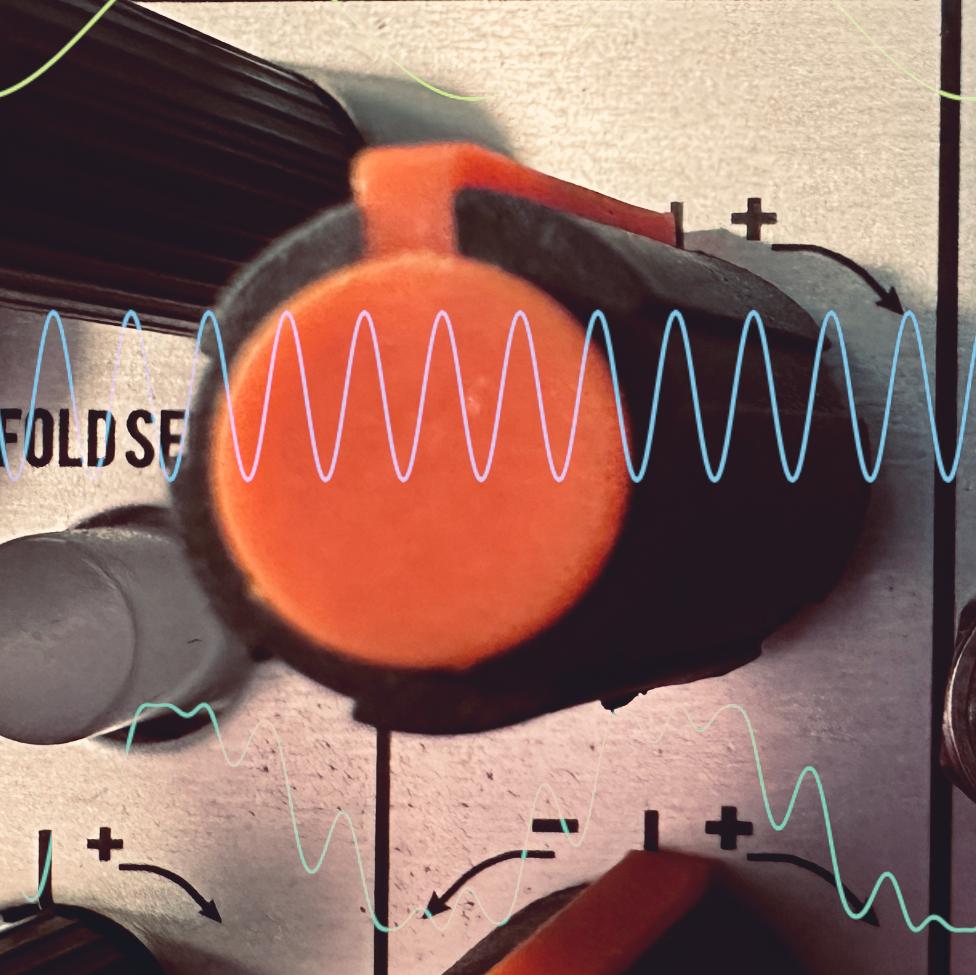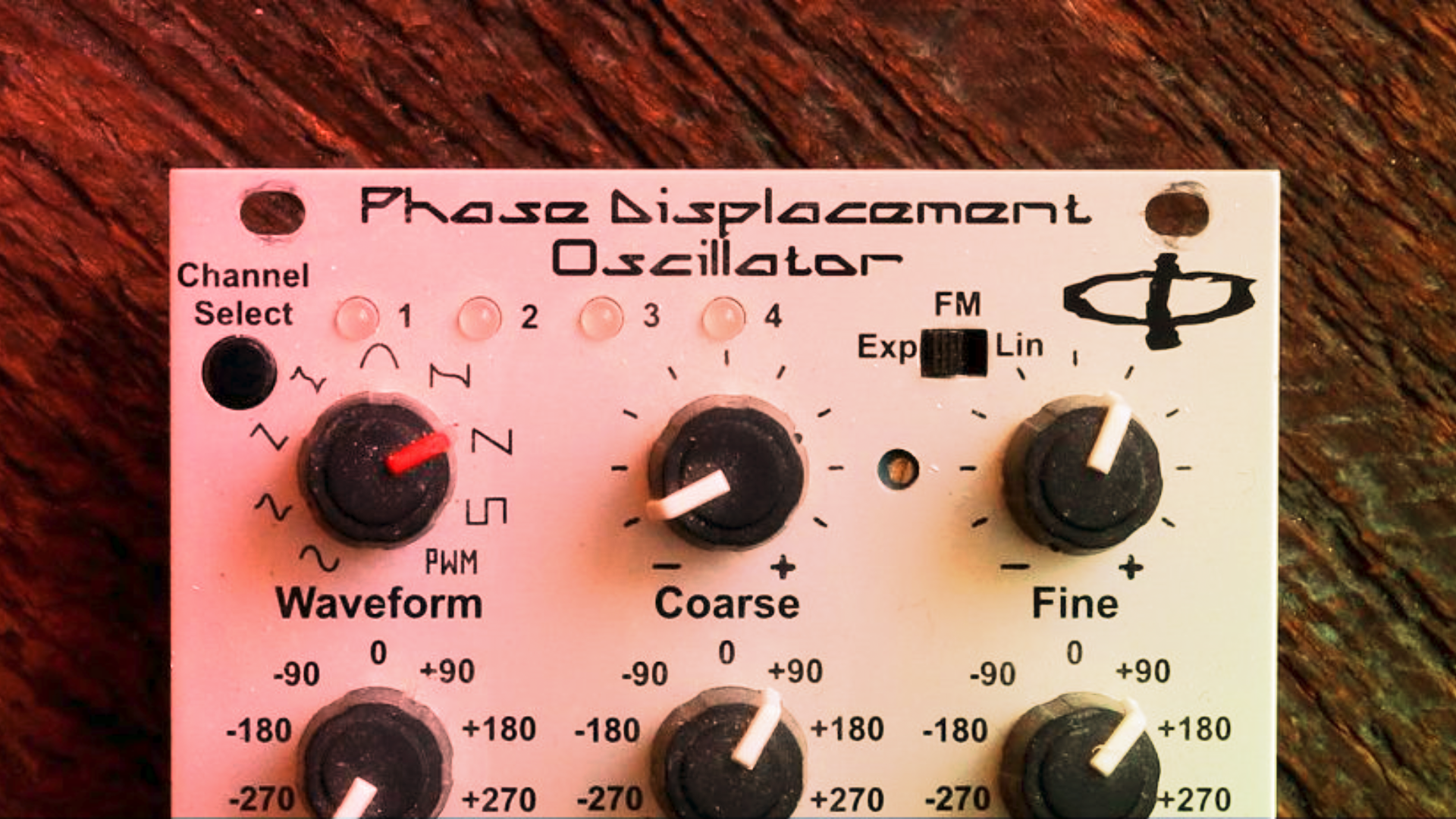
Phase is the position of a point within a wave cycle, measured in degrees (°). A full cycle is 360°, so phase shows how far along the wave is at a given moment relative to the start of its cycle.
Examples
Using a sine wave as the reference, where 0° is the zero crossing as the wave rises:
- 0° is the start of the cycle, at zero volts and rising.
- 90° is the positive peak.
- 180° is the halfway point, back at zero and falling.
- 270° is the negative peak.
Why it matters
Phase affects how waveforms interact over time.
- In stereo effects: Shifting the phase between the left and right channels creates a sense of width.
- In modulation: The starting phase of an LFO decides where in its cycle a modulation begins, which can matter for filter sweeps and retriggered patterns.
- In oscillator sync: Two oscillators at the same frequency but offset in phase add and cancel differently, which changes the sound of the combined signal. If their frequencies differ slightly, they drift in and out of phase, which causes beating.
- In phase cancellation: When two identical waves are 180° out of phase, they cancel each other out. This is used deliberately for noise reduction, such as in noise-canceling headphones.