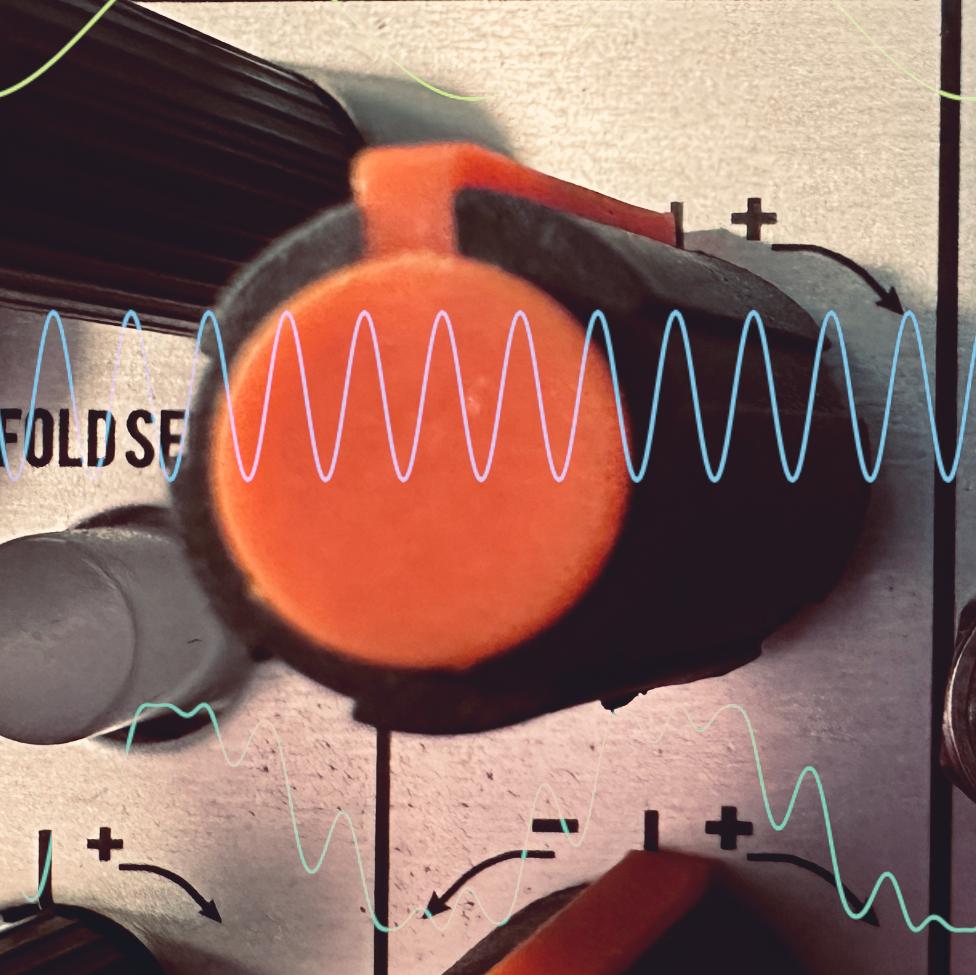
DC offset is a condition where the average voltage of a signal is shifted away from zero volts. The waveform is no longer centered on the zero line and is biased either positive or negative.
In an audio signal, DC offset is usually unwanted and can cause several problems:
- Clipping and reduced headroom: The offset pushes the waveform closer to the limits of the system’s range, so clipping happens sooner as the level rises and less headroom is left for clean amplification and effects.
- Audio artifacts: DC offset can cause pops and clicks during playback or recording and can affect mixing and processing.
- Trouble for audio modules: Modules designed for AC signals may not handle DC well, which can distort the sound or disturb VCA and filter behavior.
To manage unwanted DC offset, synthesizers and audio interfaces often use coupling capacitors or high pass filters at their inputs and outputs, so only the AC part of the signal passes.
Offset is not always a problem. In a modular system, adding a fixed voltage to a CV signal is a common technique, for example to shift an LFO so it moves only in positive voltages.