Ring modulation is one of the most powerful tools in sound design, capable of generating everything from subtle metallic textures to intense, otherworldly chaos. To those unfamiliar with its potential, it might come across as another flavor of distortion, producing sounds that feel harsh or unusable. It can also seem overly technical and intimidating. This article aims to demystify ring modulation, showing you how it works in music and why it’s an incredibly versatile and creative tool worth exploring.
Why should you care about ring modulation?
Ring modulation can transform two simple sounds into something entirely new and surprising. Whether you’re crafting metallic textures, eerie soundscapes, or abstract, alien-like tones, this technique offers a world of sonic possibilities. It’s also central to many iconic sounds in sci-fi, experimental music, and sound design for film and TV.
Learning how to use ring modulation gives you:
- Transform two signals into something neither could produce alone
- Dial in anything from harmonic bell tones to inharmonic metallic noise by changing the frequency ratio
- Add movement and complexity to vocals, percussion, drones, or anything else you can patch into it
With ring modulation, you can create a wide range of tones like shimmering cymbals or harsh industrial trash can hits, all depending on how you apply it.
How does ring modulation work?
At its core, ring modulation works by multiplying two signals together to create a completely new sound. Unlike mixing or simple amplitude modulation, which affect amplitude directly, multiplication in a ring modulator means that the entire waveform of one signal modulates the other. This interaction produces new frequencies, known as sidebands, resulting in a unique, often unexpected sound.
The two signals involved in this process are typically called the carrier and the modulator.
- Carrier: This is your main signal—often a steady tone like a sine wave, but it could be anything, such as vocals, drum loops, or even a sample of a cat meowing. The carrier provides the foundation of your sound.
- Modulator: The modulator is the signal that interacts with the carrier. It can be anything from a slow-moving LFO to another audio-rate oscillator. Sine waves are commonly used for smooth results, but experimenting with other signals offers a wide range of textures and effects.
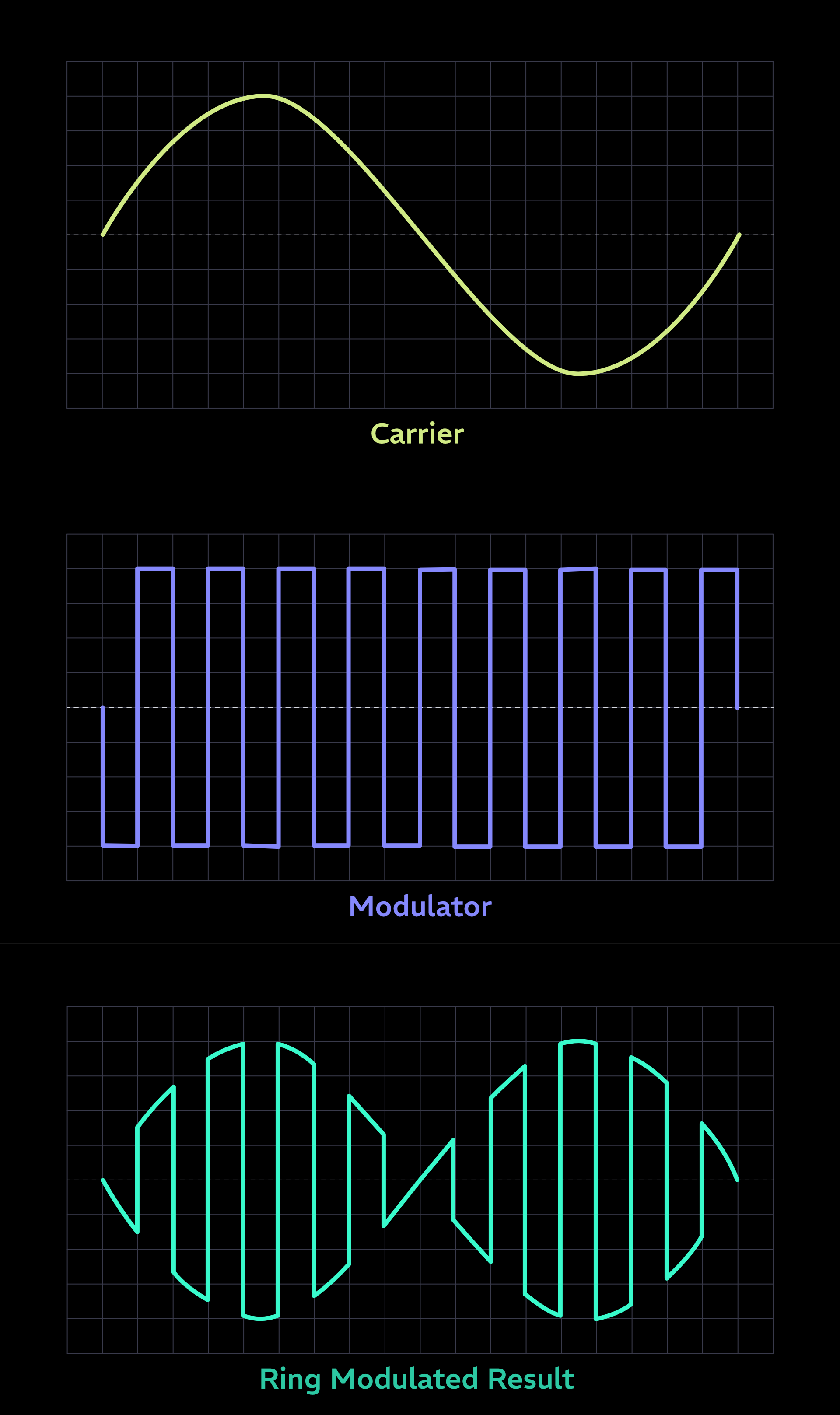
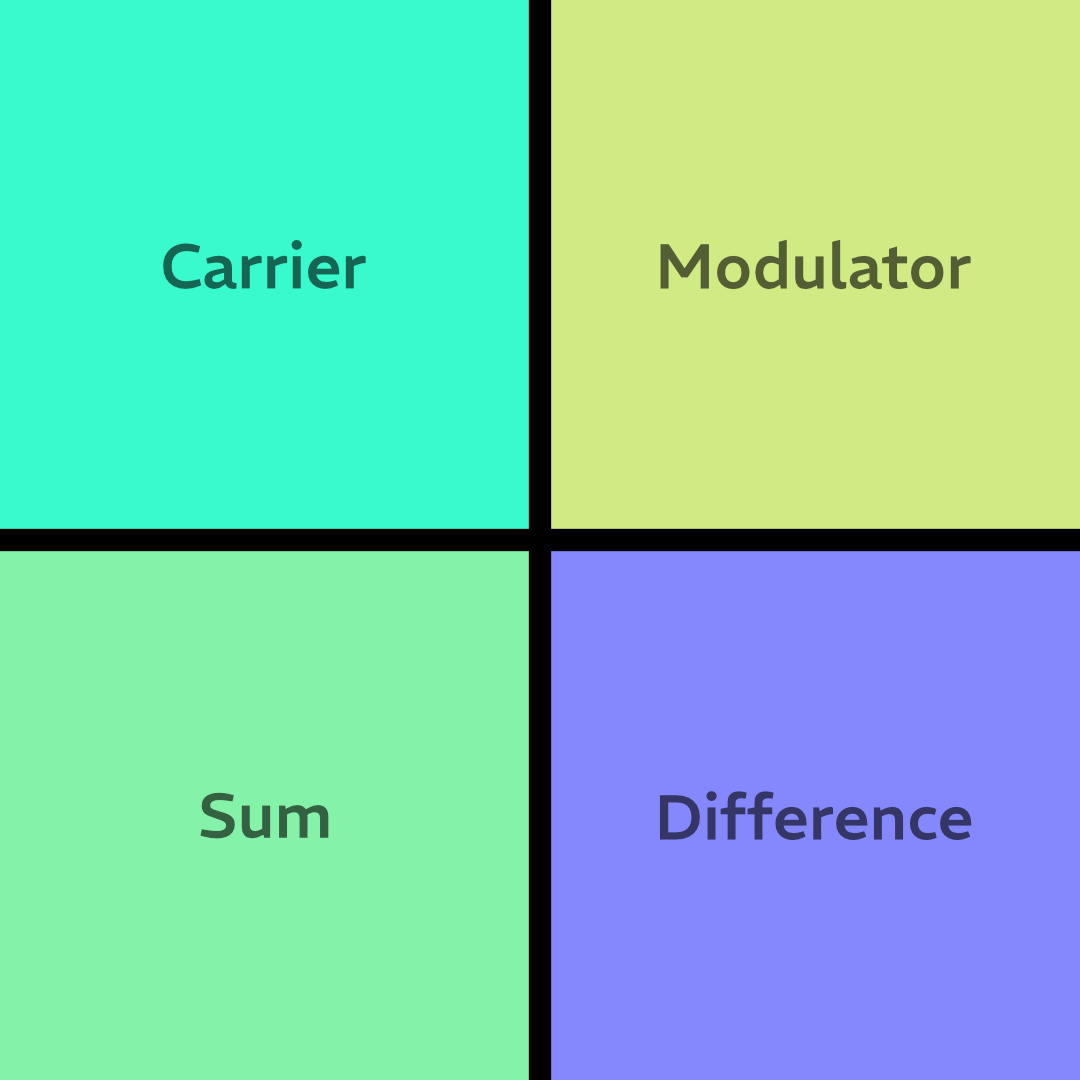
When these two signals are multiplied in a ring modulator, the result is not simply a blend of the original sounds. Instead, the ring modulator creates new frequencies based on the sum and difference of the carrier and modulator frequencies. These new frequencies are called sidebands.
For example, if you have a carrier frequency of 400 Hz and a modulator frequency of 100 Hz, the output will include two sidebands: one at 500 Hz (400 + 100) and one at 300 Hz (400 – 100). The original carrier and modulator signals are typically removed from the output, leaving only these new frequencies.
Sidebands
These sidebands are what give ring modulation its distinctive character. The harmonic quality of the result comes down to the ratio between the carrier and modulator frequencies, not how close together they are. Integer ratios like octaves or fifths produce harmonic, bell-like tones. Non-integer ratios produce dissonant, metallic, or otherworldly textures. Frequencies that are very close together produce a different effect entirely: beating, where the two signals interfere and create a slow rhythmic pulse.
What makes ring modulation unique?
What makes ring modulation unique is how it combines two signals. Unlike amplitude modulation (AM), which uses a unipolar modulator and preserves the original carrier signal in the output, ring modulation uses a bipolar modulator and removes both the carrier and modulator entirely, leaving only the sum and difference frequencies called sidebands.
The bipolar nature of ring modulation means the modulator inverts the polarity of the carrier signal each time it crosses zero volts, which produces the sidebands rather than simple amplitude changes.
Whether the result sounds harmonic or inharmonic depends entirely on the frequency relationship between the carrier and modulator. Integer ratios produce harmonic, bell-like tones. Non-integer ratios produce inharmonic, metallic textures.
The Four-Quadrant Multiplier
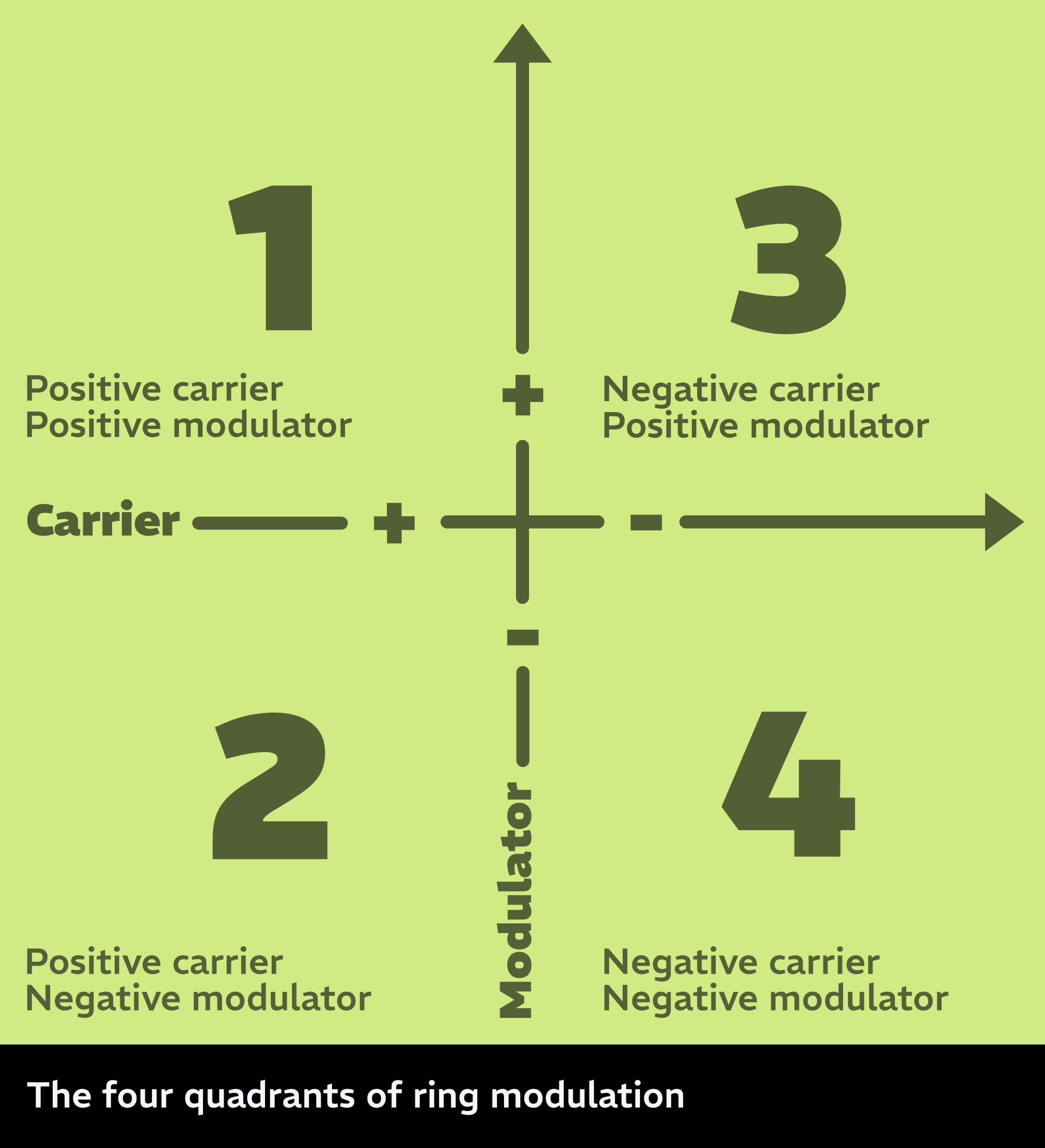
Technically speaking, ring modulation is often described as a four-quadrant multiplier. This means it multiplies both positive and negative voltages, allowing it to work with signals in all four quadrants: positive carrier/positive modulator, positive carrier/negative modulator, negative carrier/positive modulator, and negative carrier/negative modulator. This capability is what makes ring modulation capable of producing such a diverse range of sounds, as the multiplication of bipolar signals yields the complex sidebands that are central to its sound.
Patchables
What you’re going to need
To explore ring modulation, you’ll need:
- A carrier signal: A simple waveform like a sine or triangle wave is a great starting point, but don’t be afraid to experiment with more complex sounds.
- A modulator signal: This can range from a slow-moving LFO for subtle modulations to another audio-rate oscillator for more intricate results.
- A ring modulator module: Various modules are designed for this task (we’ll dive into them later).
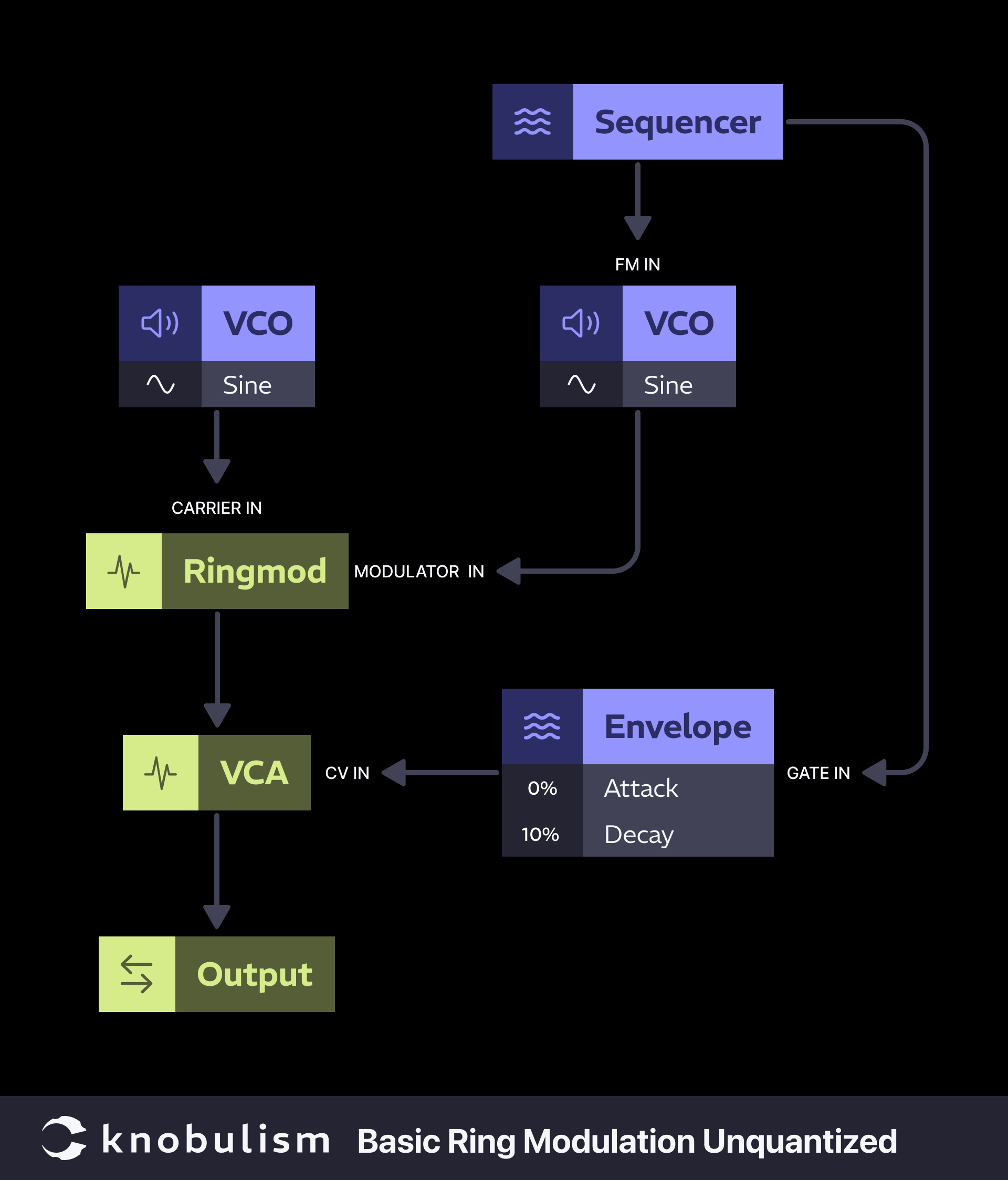
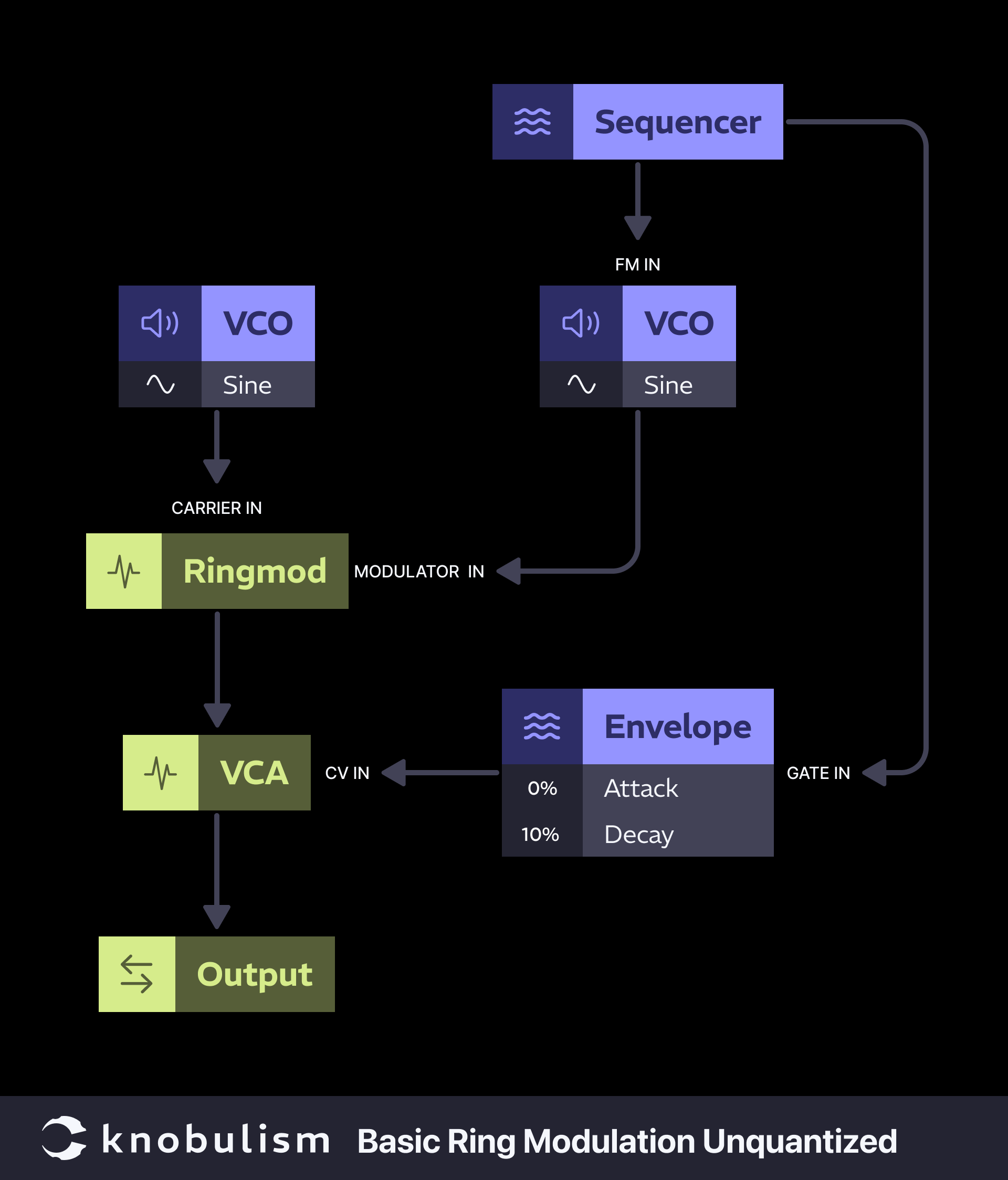
Basic Ring Modulation Unquantized
This patch is perfect for creating metallic and bell-like sounds commonly heard in sci-fi soundtracks and experimental music. Play with the envelope length and change the pitch of one osc or both.
Basic Ring Modulation Quantized
Almost identical the prior patch, except you will notice that the two oscillators are set to a fifth interval and both are tracking the same 1v/oct source. Try this out in different registers so you can get a feel for how bass sounds vs mids and highs.
After trying this patch, turn it into a drone by removing the sequencer and envelope, turn up the VCA or modulate it with a LFO. Add a bit of delay or reverb at the end. Then start messing with the pitch on both VCOs.
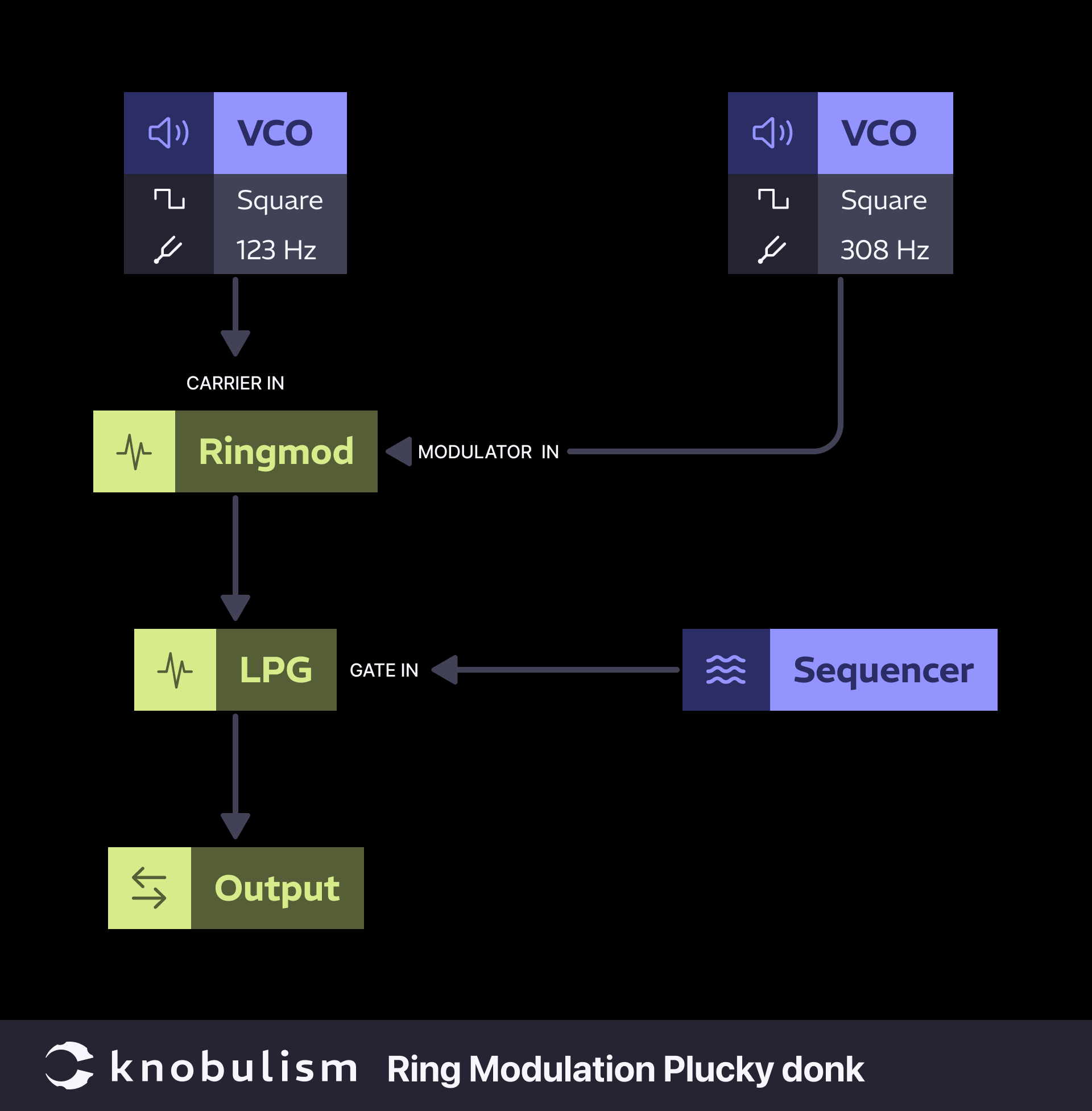
Ring Modulation Plucky donk
Everyone likes a good low passed atonal percussive donk sound, right? Well, they should. Again, this is very similar patch but using an LPG to round off the higher harmonics and simplify the patch.
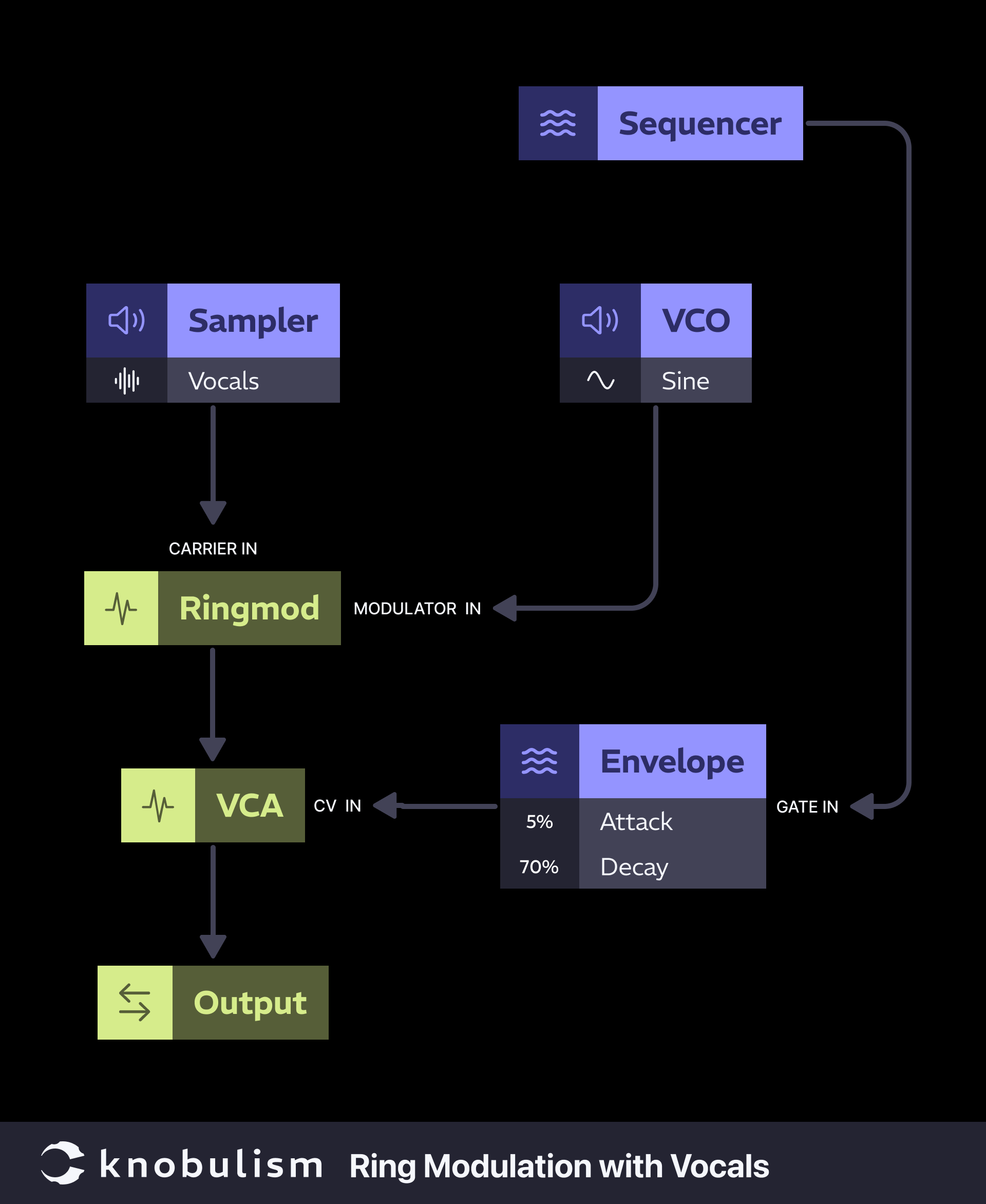
Ring Modulation with Vocals
Ring modulating a vocal track is a popular technique for creating robotic voices, often used in electronic music, sci-fi sound design, or experimental tracks.
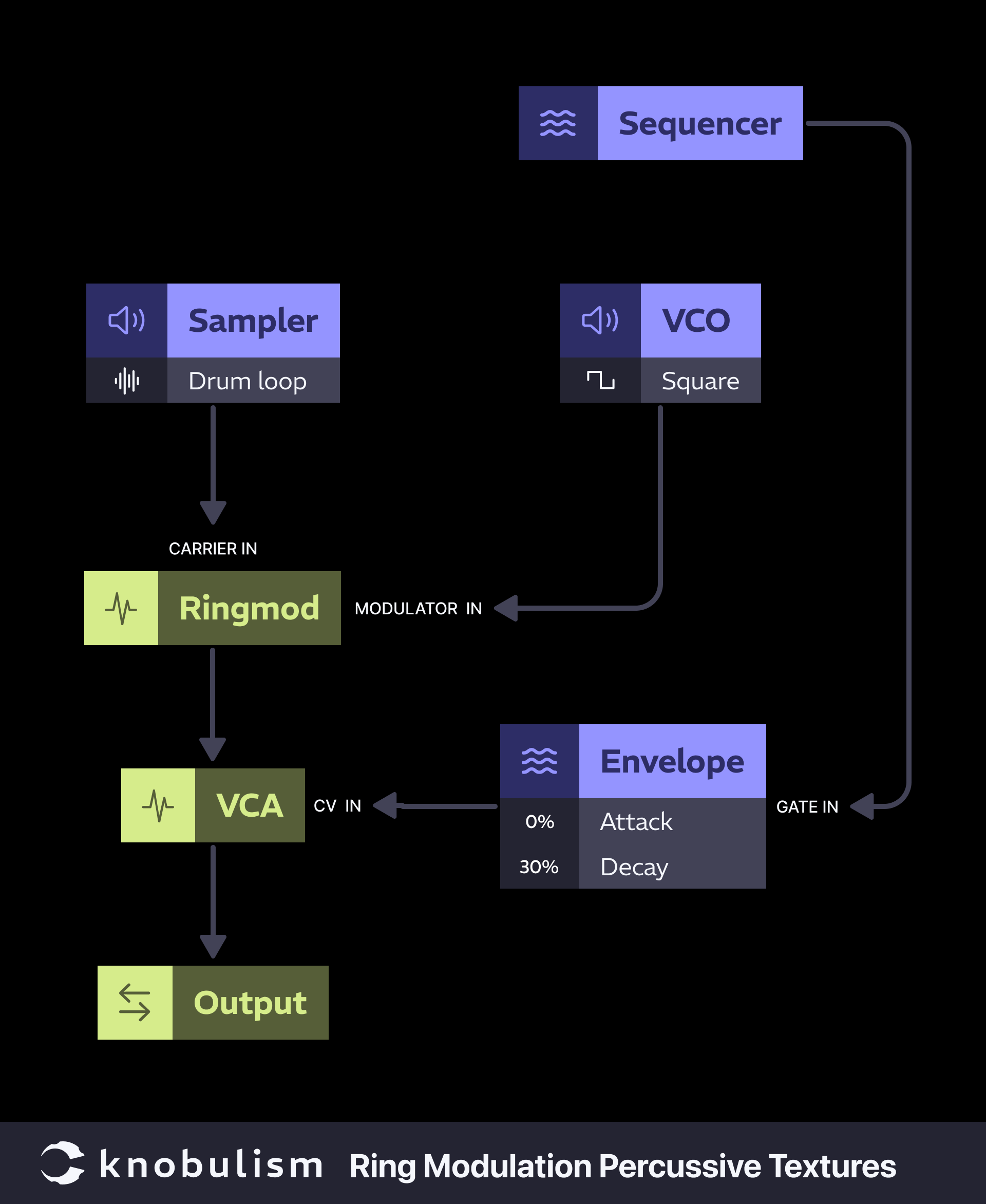
Percussive Textures
This patch is excellent for turning regular percussion into something more industrial, glitchy, or metallic, perfect for industrial, IDM, or experimental styles.
Practical Tips and Insights
Ring modulation can be a powerful sound design tool, but as with any complex technique, it’s all about how you use it. Here are a few practical tips to keep in mind:
- Experiment with modulation sources: While sine waves are the classic choice, trying different waveforms or even non-traditional audio sources like vocals or field recordings can open up new tonal possibilities.
- Mind the frequencies: The relationship between the carrier and modulator is key to controlling the harmonic or dissonant quality of the output. If you want harmonic, bell-like tones, keep the frequencies related (octaves, fifths) and close together. If you’re after metallic or alien textures, try wider frequency gaps.
- Use filters creatively: After applying ring modulation, a good filter can help shape the sound even further. Use low-pass filters to tame harsh overtones or resonance to accentuate specific frequencies.
- Blend it with other effects: Ring modulation works beautifully in conjunction with other effects like delay, reverb, or even distortion. Layering these effects can add depth to the already complex textures produced by ring modulation.
Best Modules for Ring Modulation
There are plenty of modules to explore when it comes to ring modulation. Some offer classic designs, while others bring more experimental features to the table. Here are a few standout options:
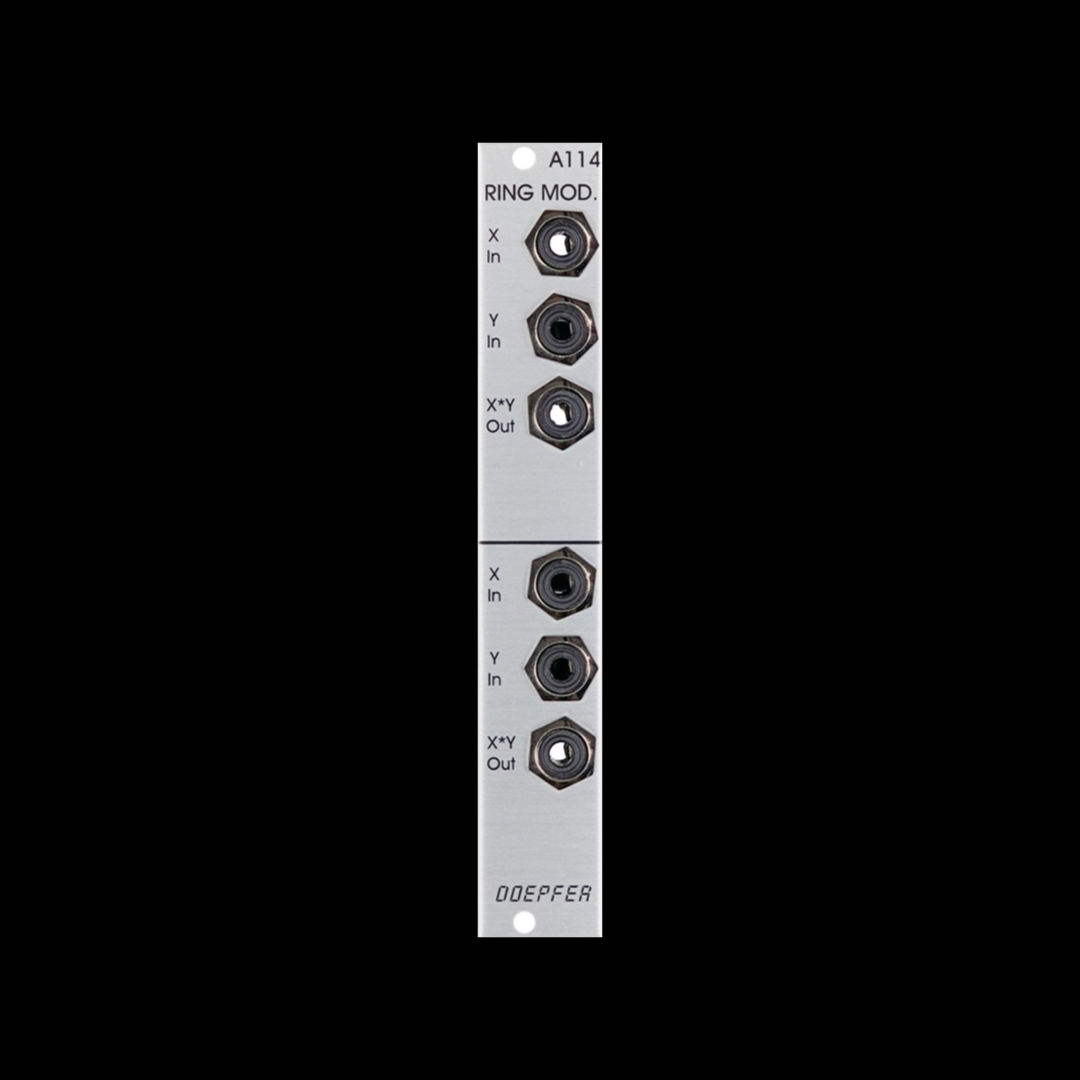
Doepfer A-114 Dual Ring Modulator
A solid, straightforward module that provides two independent ring modulators in one. It’s great for those who want a no-nonsense a pproach to classic ring modulation.
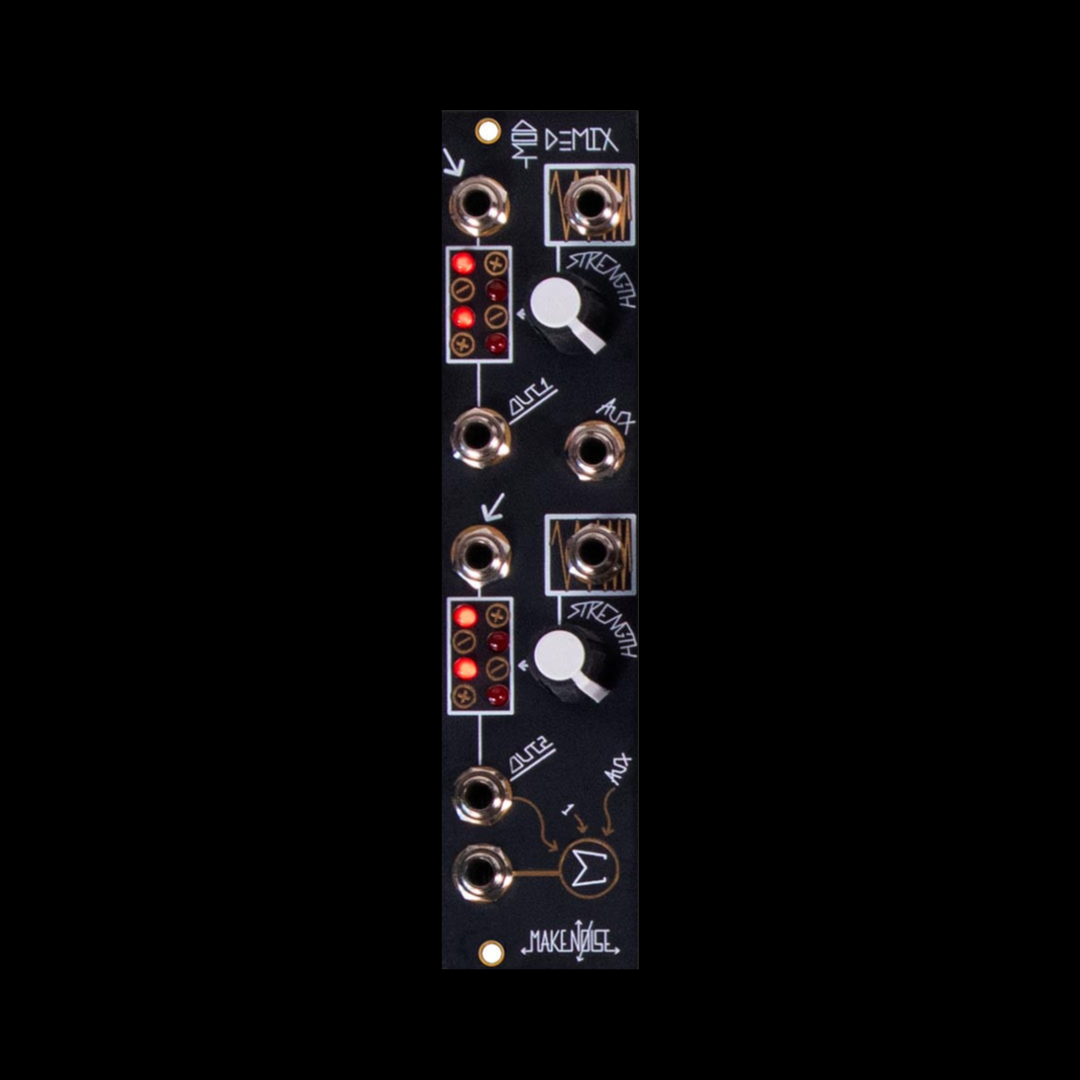
A dual bipolar VCA designed for ring modulation duties. The channels are normalled so you can ring modulate your ring modulated signal. With an auxiliary input and sum output, it also offers mixing capabilities for further sound shaping.
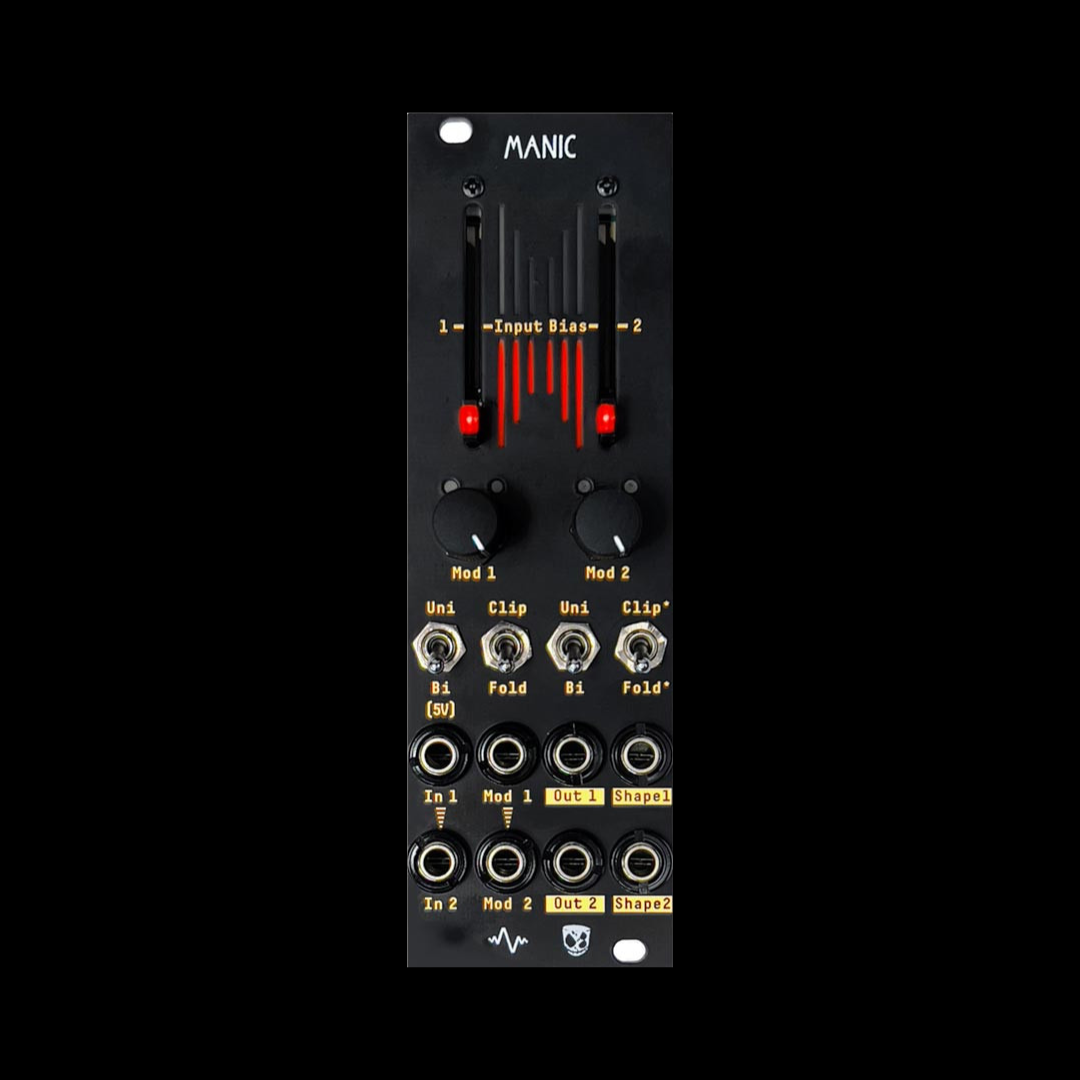
Two absurdly versatile VCAs with features like saturation, wavefolding, and stereo operation. Easily toggle a switch to bipolar on each VCA for ring modulation.
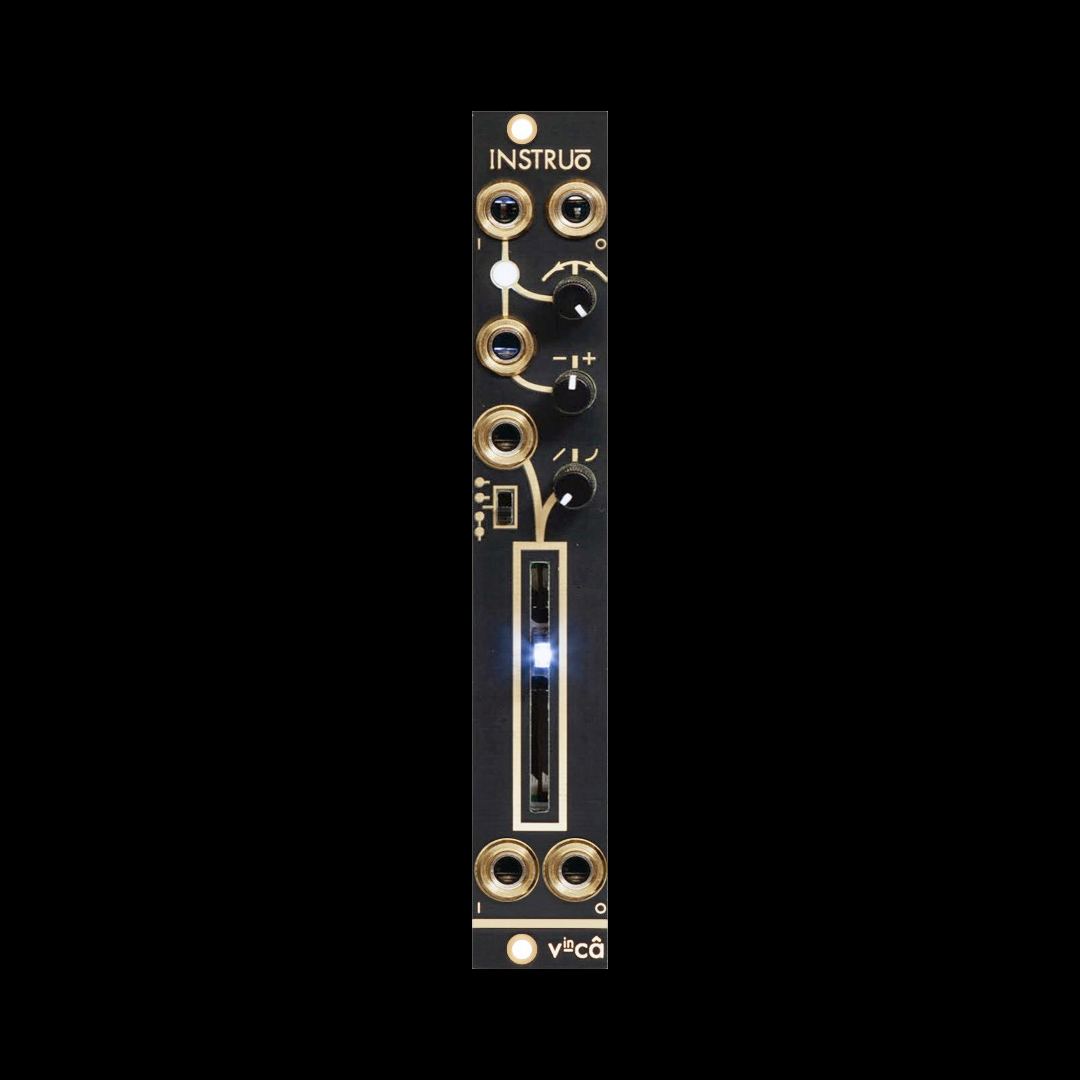
Also a dual VCA but with the upper channel functioning as a ring modulator, thanks to its four-quadrant multiplier design. Both the carrier and modulator signals can be finely tuned with attenuverters, offering precise control.
Ring modulation is a unique and powerful tool in sound design, capable of creating everything from ethereal, harmonic textures to chaotic, metallic noise. By understanding the relationship between the carrier and modulator, and how sidebands are created, you can tap into an incredibly versatile range of sounds.
It’s not just for avant-garde noise artists or sci-fi sound designers either—ring modulation can be used subtly to add depth to traditional patches, or more aggressively to push the boundaries of what a synth can do. With a little experimentation, you’ll find it’s an invaluable addition to your sonic toolkit.
Have you experimented with ring modulation in your patches? Share your favorite patches, experiences, or questions in the comments below! Let’s keep the conversation going—what’s your favorite ring modulation module or technique?